
Choose a Gas Fireplace Insert: Size, BTU, Venting
A gas fireplace insert can turn a drafty, unused firebox into the warmest seat in the house. But pick the wrong size, venting setup, or BTU rating and you'll spend thousands on an appliance that either overwhelms a small room or barely takes the edge off a large one. The stakes are higher than most buyers expect. Mismatched dimensions mean costly returns. Incorrect venting can violate local building codes. And in parts of California and Nevada, permitting requirements add another layer of complexity that generic online advice rarely covers. Below, you'll find a practical decision framework: how to measure, what venting options actually work for retrofit installs, how to match heat output to your space, and when to stop Googling and call a professional.
What Is a Gas Fireplace Insert, and Do You Actually Need One?
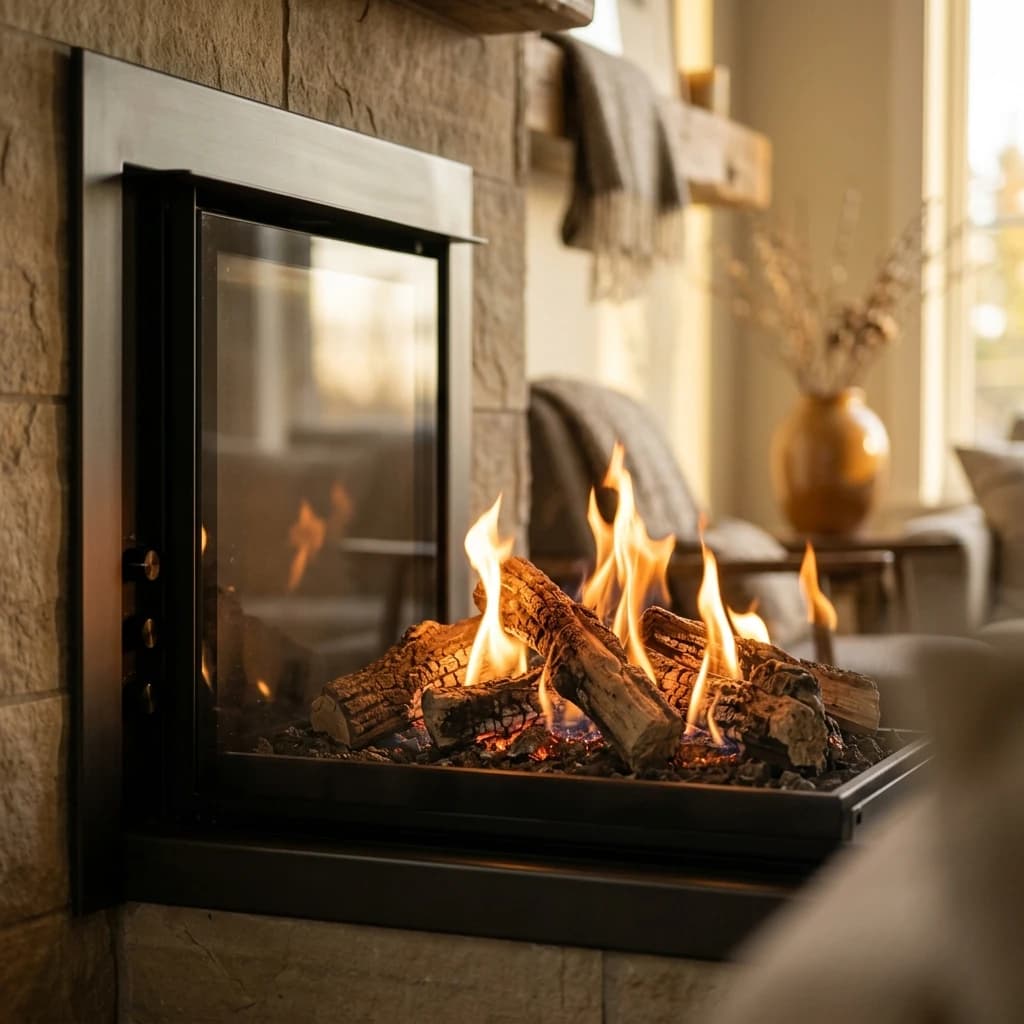
A gas insert is a sealed, factory-built firebox that slides into an existing masonry or factory-built fireplace opening. It connects to your gas supply and vents combustion gases through a liner that runs up your existing chimney. That's what separates it from gas logs (which sit inside an open fireplace and vent up the chimney unlined) and from a built-in gas fireplace (which gets framed into new construction and doesn't require an existing firebox at all). If you're unsure whether your hearth setup calls for an insert or something else entirely, a good starting point is understanding the difference between a gas fireplace and a gas insert. Why does the distinction matter? Inserts are purpose-built for retrofits. They're designed to fit inside the constraints of an existing opening, which means dimensions, venting paths, and clearances are non-negotiable.
How to Measure Your Fireplace Opening for the Right Insert
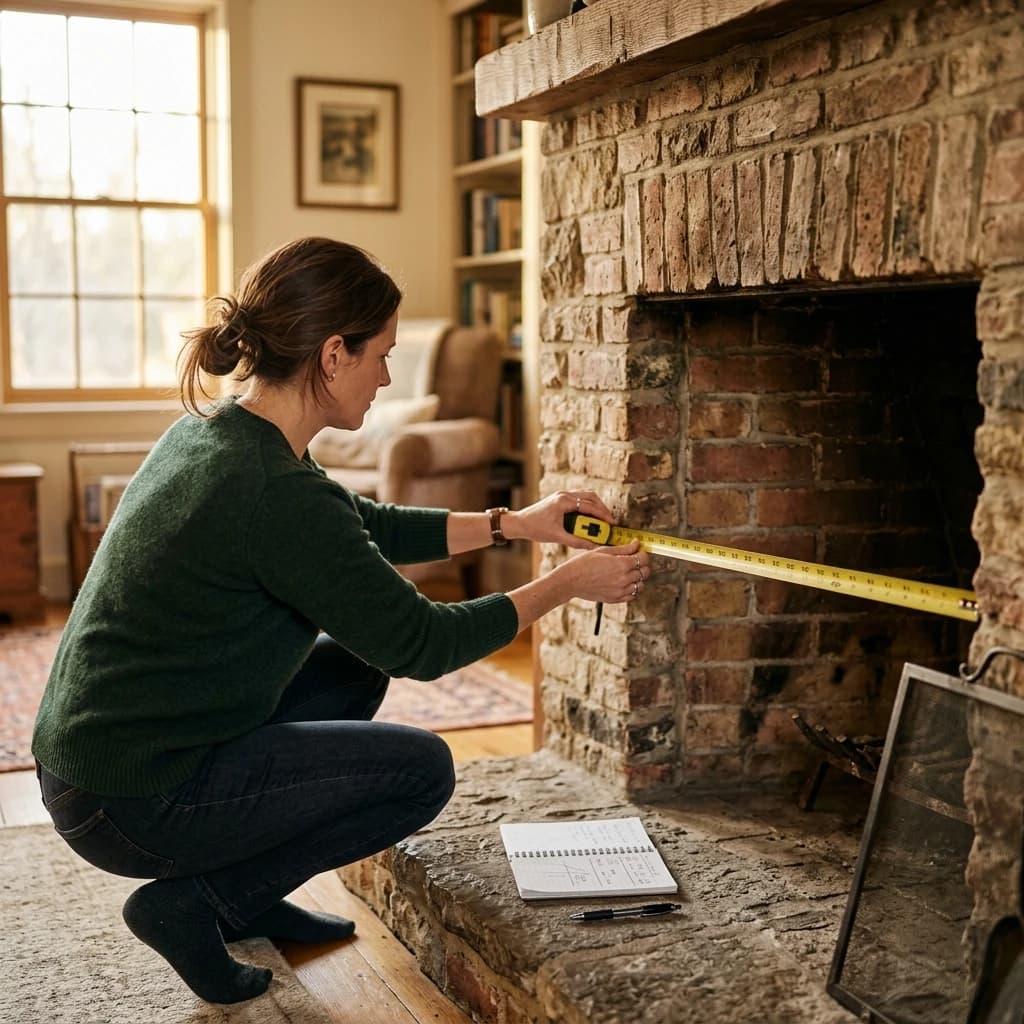
Grab a tape measure before you start shopping. The most common and most expensive mistake is ordering an insert that doesn't physically fit.
The Five Measurements You Need
Take these from inside the firebox, with any grate or log set removed: front width, measured across the widest point at the front opening; rear width, measured across the back wall (most fireboxes taper inward, so this number will be smaller); opening height, measured from the hearth floor to the top of the opening at center; firebox depth, measured from the front face straight back to the rear wall; and hearth depth, measured from the front of the fireplace opening outward to the edge of the hearth. The taper matters more than most guides acknowledge. A firebox that measures 36 inches across the front but only 22 inches at the back won't accept every 36-inch insert. Always check both the front and rear width specs on the manufacturer's spec sheet.
Clearance and Mantel Fit
Every insert requires minimum clearances to combustible materials, including your mantel. If you have a wood surround, the insert's documentation will specify how far the mantel must sit above and to the sides of the unit. This is where aesthetics and safety collide. A beautifully proportioned mantel installed two inches too close to the insert violates code. Plan both elements together, rather than buying the insert first and the mantel second, to avoid that headache entirely. Current fireplace design trends for California homes emphasize clean surrounds with generous proportions, and those proportions depend on knowing your clearance numbers upfront.
Gas Insert Venting: Direct Vent, B-Vent, and What Works for Retrofits
Venting is the single biggest variable that separates a safe, code-compliant install from a problematic one. Here's how the three main types break down for inserts. Direct vent is the standard for modern gas inserts and the one we'd recommend in almost every case. It uses a coaxial liner (pipe within a pipe) that draws combustion air from outside and exhausts fumes back out through the chimney. The firebox stays sealed from your living space, which means your indoor air quality stays clean and efficiency stays high. B-vent (natural vent) pulls combustion air from the room and vents up the chimney. These units are less efficient and less common in newer inserts. They also require adequate room volume for combustion air supply. Vent-free units don't vent at all. While legal in some jurisdictions, they're restricted or banned in certain California air districts. We'd generally steer you toward direct vent unless you have a very specific use case. Your existing chimney condition determines what's feasible — a cracked flue liner or deteriorating masonry may need repair before any insert goes in. Start with a chimney inspection.
BTU Guide: How Much Heat Output Do You Actually Need?
BTU (British Thermal Unit) ratings tell you how much heat the unit produces. But the number on the box isn't the whole story.
Matching BTUs to Room Size and Climate
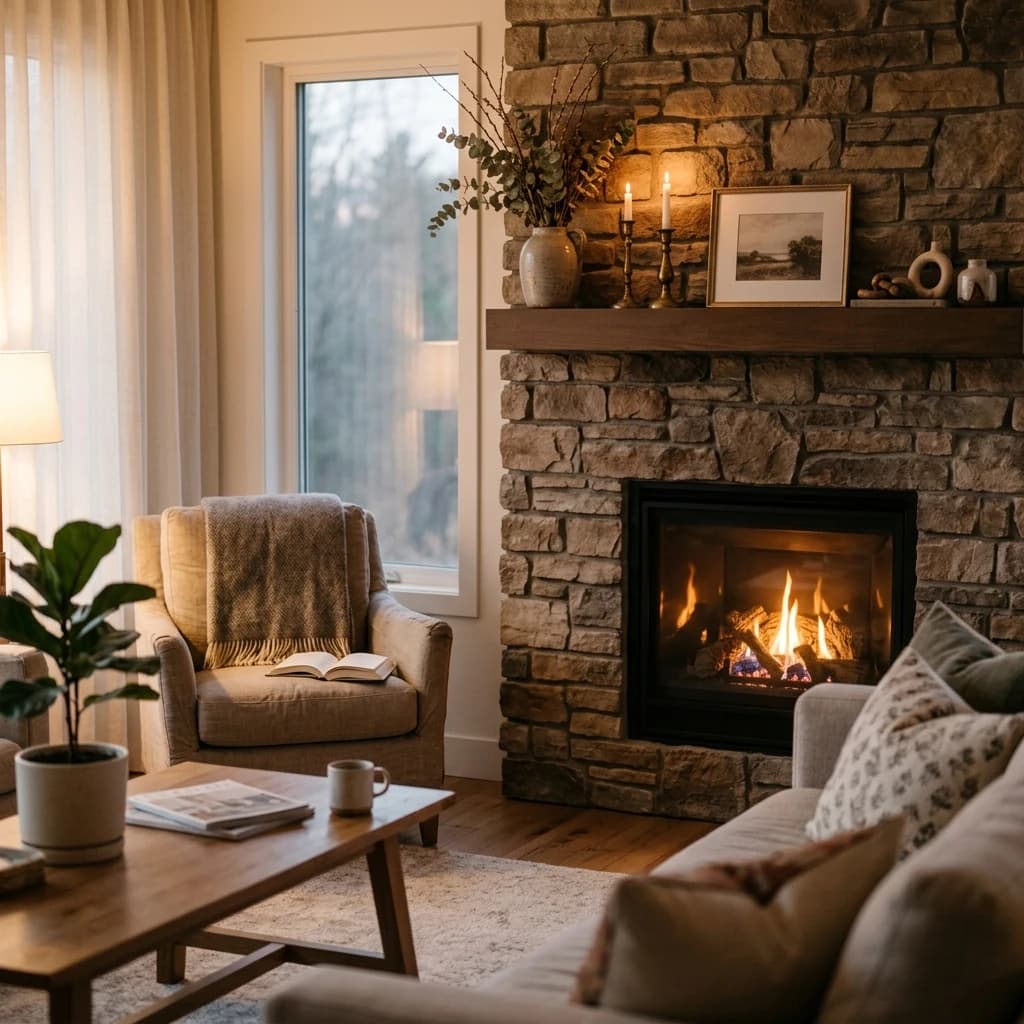
A rough rule of thumb: you need about 20 BTUs per square foot in a mild climate and up to 35 BTUs per square foot in colder areas. A 400-square-foot living room in coastal Southern California might only need an 8,000 BTU insert for supplemental warmth. The same room in Reno during January might call for 14,000 BTUs or more. But those numbers shift based on ceiling height and how well your home insulates. A vaulted ceiling with single-pane windows loses heat fast, even in a temperate zone. How will you use the insert? Supplemental heat on chilly evenings calls for a smaller unit than primary-source heating during winter months.
Efficiency Ratings Tell the Real Story
An insert rated at 30,000 BTUs with 80% efficiency delivers 24,000 BTUs of usable heat. One rated at 25,000 BTUs with 90% efficiency delivers 22,500. The gap narrows fast. Always compare how much heat you actually get. The U.S. EPA's BurnWise program notes that gas inserts offer significant efficiency gains over open fireplaces, which typically lose most of their heat up the chimney. That efficiency advantage is the whole reason inserts exist.
Natural Gas vs. Propane: Which Fuel Fits Your Situation?
Most inserts are available in both natural gas and propane configurations. Your choice usually comes down to what's already available at your property. If you have an existing natural gas line near the fireplace, that's the obvious path. Running a new gas line adds cost, typically several hundred dollars or more depending on distance and local labor rates. Propane is the go-to for rural properties in Nevada or mountain communities in California where natural gas service isn't available. Propane burns slightly hotter per cubic foot, but refilling your tank adds an ongoing cost that piped natural gas avoids. Neither fuel is objectively "better." Match it to your infrastructure and budget.
What Does a Gas Insert Actually Cost to Install?
The insert itself is only one line item. A realistic budget accounts for several components, and skipping any of them leads to surprise invoices mid-project: the insert unit (firebox, burner, glass front); venting and liner (a coaxial liner for direct vent through your existing chimney); gas line work (running or extending a gas line); electrical (an outlet for the blower and ignition, if not battery-powered); surround and finish (mantel, facing, tile, or stone); labor (professional installation and testing); and permits (required in most California and Nevada jurisdictions). Budget note for Bay Area homeowners: the Bay Area Air Quality Management District's Clean HEET program does not cover gas fireplace inserts. Factor that into your financial planning if you were counting on rebate assistance. When you're weighing the ongoing expense, understanding how to maintain your gas fireplace for safe and efficient use helps you anticipate annual service costs and avoid deferred surprises.
When to Stop DIY-ing and Call a Pro
You can absolutely handle the research, measuring, and comparing features on your own. That homework saves time and money. But certain steps require a licensed professional, and this is where cutting corners creates real risk. Have a certified technician inspect your chimney to assess structural integrity and confirm your flue can accept a liner. Gas line work requires a licensed plumber or gas fitter in both California and Nevada. And installing the insert itself involves testing gas connections, verifying combustion air supply, and confirming clearances to combustible materials. If you're also selecting a mantel, having a single team coordinate the insert and the surround avoids the clearance conflicts we described earlier. That integrated approach — designing the full fireplace composition rather than assembling it in pieces — is where the difference between a good result and a great one shows up.
Frequently Asked Questions
A few of the questions we hear most often from homeowners weighing a gas insert.
Can you put a gas fireplace insert in an existing fireplace?
In many cases, yes, but your existing fireplace and chimney must be compatible with the insert's venting system and clearance requirements. A certified chimney inspection is the best way to confirm your flue can accept the correct liner and that the structure is in safe condition before you buy.
What are the disadvantages of a gas fireplace insert?
The biggest downsides are how complex the project can get and the upfront cost, especially if you need venting, gas line work, electrical, or surround changes. In some California jurisdictions, permitting and air district rules can also limit certain configurations or add time to your install.
Are gas fireplace inserts worth the money?
They can be, if you want a cleaner, more controllable heat source than an open fireplace and you plan to use it regularly. Value typically comes down to choosing the right unit for your space and avoiding rework from sizing, venting, or clearance mistakes.
What are the code and permit steps in California and Nevada that can delay a gas insert project?
Most projects require permits, and timelines can vary by city, county, and local air district rules. Before you order equipment, confirm permit requirements, inspection steps, and any vent-free restrictions with your local building department and your installer.
How do I choose between a standing pilot and electronic ignition for a gas insert?
A standing pilot can simplify how you operate the unit but uses a small amount of gas continuously, while electronic ignition reduces fuel use by lighting only when you need it. If you care about performance during outages, ask whether the unit can run on battery backup or requires household power to ignite and control.
What features should I compare beyond BTUs when selecting a specific model?
Compare glass size and viewing area, how the flame looks, blower noise levels, thermostat or remote controls, and how the surround panels fit your opening. Also check warranty terms and whether you can get local service, since parts and support matter long after you install.
How do I plan my surround and mantel design so it stays compliant and looks proportional?
Start with the insert's published clearance requirements, then design your mantel height, depth, and side legs around those constraints. If you are changing facing materials like tile or stone, confirm final dimensions with your installer so finish thickness does not create clearance or fit issues.
Your Next Step Toward the Right Insert
Choosing a gas fireplace insert comes down to five decisions: size, venting type, BTU output, fuel source, and who installs it. Get those right and you'll have an appliance that heats efficiently, looks proportional to your space, and meets code on the first inspection. Get one wrong and you're looking at returns, rework, or a unit that never quite performs the way you expected. If you're in California or Nevada and want to see inserts sized alongside mantels and surrounds in a real showroom setting, [California Mantel & Fireplace](/) has been helping homeowners and builders make these decisions since 1987. Their studio approach means you can evaluate proportions, clearances, and finishes together rather than guessing from spec sheets. Reach out for a consultation before you commit to a unit.
Natalie Casey
California Mantel & Fireplace
Design Consultation
See the materials, scale, and flame in person.
Meet with a hearth consultant to align the mantel, appliance, finish, clearances, and installation plan around the room you want to create.
Book Consultation